The UW Department of Radiology awards research and development (R&D) funds to faculty and staff throughout the year to support early career researchers and new avenues of research imaging. By providing seed funding, the department enables investigators to obtain preliminary data in preparation for major grant applications.
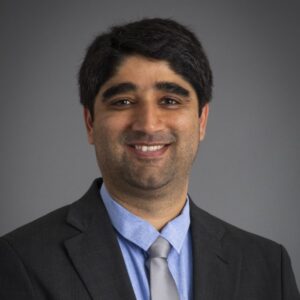
Sarv Priya, MD, MBBS recently received R&D funding for “4D Flow+ Cardiac MRI: One-Stop Solution Integrating Cine, Flow, and MRA in a Single Acquisition.” Dr. Priya joined the department in 2024 in the Sections of Pediatric Radiology and Cardiovascular Imaging.
 Can you provide an overview of the study?
This pilot study evaluates 4D Flow+, a single, free-breathing MRI protocol that captures cardiac function, blood flow, and vascular anatomy within 10 minutes. Traditionally, these assessments require multiple separate sequences, including cine imaging, contrast-enhanced MR angiography, and flow-sensitive acquisitions, and are often performed under sedation in pediatric patients.
By integrating all three assessments into a single rapid scan, 4D Flow+ may significantly improve imaging for children with congenital heart disease by increasing speed, safety, and efficiency. Our immediate objective is to validate the diagnostic accuracy and image quality of 4D Flow+ compared to the current standard-of-care two-dimensional imaging.
What further research do you hope to build off this study in the future?
Upon obtaining robust pilot data, we intend to extend this approach to a larger pediatric cohort and investigate its potential to streamline clinical workflows. In the long term, this strategy may reduce the need for sedation, decrease examination times, and increase scanner availability, thereby improving patient comfort and cost-effectiveness.
Since you were recently awarded the funding, what are the next steps for you between now and when the study begins?
The initial step involves obtaining Institutional Review Board (IRB) approval to address all ethical and safety considerations. Concurrently, we are conducting meetings with the research and development team to ensure that all personnel, including radiologists, technologists, and coordinators, are thoroughly familiar with the study design and workflow. This preparatory work is critical for the smooth execution of the study once patient enrollment commences.
Another priority is to finalize the technical protocols and optimize the reconstruction pipelines, as the success of 4D Flow+ depends on advanced acquisition and post-processing strategies.
What advice about applying for research and development funding would you give to colleagues early in their research career?
For early-career researchers, my primary recommendation is to engage with collaborators as early as possible in the process. Meet as a team, discuss the proposal in detail, and remain open to multiple iterations to develop a clear and well-structured plan. Given that pilot funding is often limited in scope, it is essential to ensure that goals and objectives are realistic and achievable within existing resources. Reviewers seek clarity and feasibility and expect applicants to present both a strong idea and a practical implementation plan.
A pilot study represents only the initial phase and establishes the foundation for subsequent, larger projects. Demonstrating the ability to achieve stated aims positions researchers for more significant opportunities in the future.